

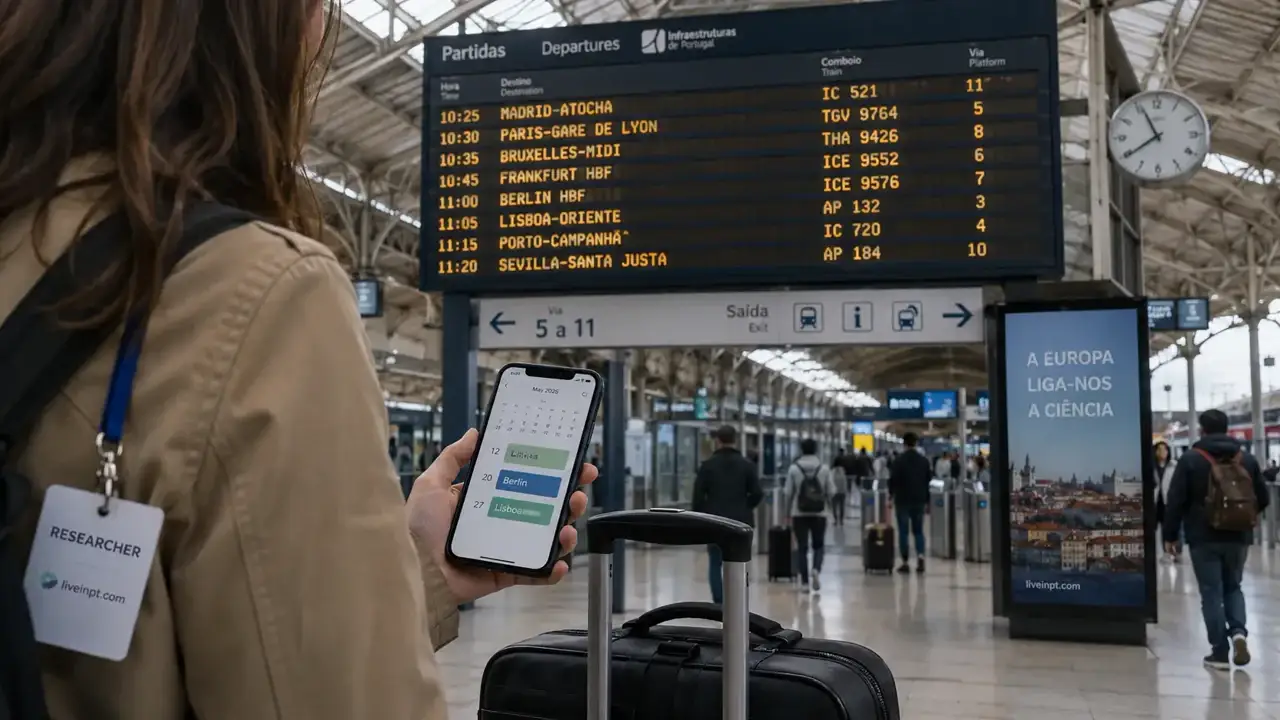
Article 91-C is Portugal’s intra-EU researcher mobility route. It is designed for a third-country national who already holds a residence permit marked researcher or researcher mobility from another EU Member State and needs to carry out part of that research in Portugal at a recognised host organisation. Teaching can also be included.
This is not a general route for anyone who happens to work in research. The first question is the immigration category on the residence permit issued by the other EU country. If that document is the wrong type, Article 91-C may not apply even if the Portuguese activity is a PhD, postdoc, fellowship or research contract.
Does Article 91-C Apply to You?
| Your situation | Likely route in Portugal |
|---|---|
| You hold an EU residence permit marked researcher or researcher mobility and will conduct part of the research in Portugal | Article 91-C |
| Portugal will be your first EU country as a researcher | Article 91-B researcher residence permit |
| You are a PhD or higher-education student and the first EU country issued you a student residence permit | Check Article 91-A student mobility or the standard Article 91 student permit |
| You live in another EU country on an ordinary employee, self-employed or other residence permit and later accept a Portuguese research position | Do not assume Article 91-C applies; the Portuguese host should check whether a fresh Article 91-B route is required |
The distinction is easy to miss because academic status and immigration status are not always the same thing. A PhD candidate can be doing research but still hold a student permit. A scientist employed in Spain or Germany can work as a researcher while holding an ordinary work residence permit. Article 91-C is tied to the researcher/researcher-mobility residence category, not the job title alone.
Before arranging the move, send a copy of the first-country residence card to the Portuguese host’s international office or HR team and ask which legal route they intend to use. That check can prevent the entire AIMA process from starting under the wrong article.
What Article 91-C Actually Covers
Article 91-C has two mobility tracks. A qualifying researcher can use the short-term mobility route for up to 180 days in a 360-day period in Portugal. A stay beyond that threshold requires a Portuguese long-term researcher-mobility residence permit from AIMA.
That threshold is only the switch between the two Article 91-C procedures; this guide does not duplicate the general day-counting rules. The practical questions here are who actually qualifies for Article 91-C, how the AIMA long-term application works, what happens while it is pending, and what changes for family, travel and renewal.
Short-Term Article 91-C Has an Official-Source Conflict
The current wording of Article 91-C(1) says a qualifying researcher may enter and remain in Portugal to conduct part of the research, and also teach, on the basis of the first Member State’s researcher residence permit and a valid passport, with exemption from other formalities. The researcher must also not be flagged in the Schengen Information System for refusal of entry or stay.
However, FCT’s September 2025 legal-framework document still describes a short-term AIMA notification procedure. It says the researcher should notify AIMA before mobility and submit documents such as the first-country residence permit, passport, host declaration, criminal record, means of subsistence and health insurance.
These two official sources are not aligned. AIMA’s current Article 91-C webpage is specifically for long-term researcher mobility and does not publish a current dedicated short-term researcher-mobility email address.
For that reason, do not copy an old SEF-era notification workflow or send documents to an unrelated mobility email simply because it appears on another AIMA page. In particular, comunicacao.mobilidade.ue@aima.gov.pt is currently published by AIMA for Article 91-A higher-education student mobility, not as a dedicated Article 91-C researcher email.
If your Portuguese university or research centre says it has a current institutional Article 91-C notification procedure with AIMA, follow the institution’s current instructions and keep written evidence of what was submitted.
There is also a specific legal exception. If the first residence permit was issued by an EU Member State that does not fully apply the Schengen acquis, AIMA may require a declaration from the Portuguese host organisation setting out the mobility conditions. For accompanying family members, AIMA may also require valid residence documents and proof that they are accompanying the researcher.
When You Need the Long-Term Article 91-C Permit
For long-term mobility, the researcher must apply to AIMA for a Portuguese residence permit marked mobilidade investigador.
Article 91-C contains two different filing moments:
- If the Portuguese stay is planned as long-term from the start, submit the application within 30 days after entering Portugal.
- If the researcher first uses the short-term Article 91-C mobility route and the project later becomes long-term, submit the application 30 days before the short-term mobility period ends.
The second deadline is easy to overlook. Waiting until the short-term period has already finished creates an avoidable status problem because the law expects the long-term application before that point.
How to Contact AIMA for an Article 91-C Long-Term Application
AIMA’s current Article 91-C page says the long-term application is made by appointment and submitted in person. It can be presented at any Loja AIMA, although AIMA may later forward the file to the service responsible for the applicant’s area of residence.
AIMA does not currently publish a separate Article 91-C long-term email address on that page. Its official general appointment guidance lists these channels:
| AIMA channel | Current detail |
|---|---|
| Contact Centre | +351 217 115 000 |
| Hours | Monday to Friday, 08:00–20:00 |
| General email | geral@aima.gov.pt |
| Contact form | contactenos.aima.gov.pt/contact-form |
| AIMA shops | AIMA shop directory |
When contacting AIMA, identify the procedure precisely as “Artigo 91.º-C — Mobilidade dos Investigadores — Longa Duração”. Do not just ask for a generic residence appointment, because Article 91-C depends on the existing researcher permit issued by another EU Member State.
A practical email subject line is Pedido de agendamento — Artigo 91.º-C — Mobilidade dos Investigadores — Longa Duração. In the message, state which EU Member State issued your current researcher permit, its expiry date, the Portuguese host organisation, the planned research period and whether you are already in Portugal. Attach the core documents only if the AIMA channel or host institution asks for them; this subject line and message format are LiveinPT guidance, not an AIMA-prescribed template.
AIMA also states that appointment booking is free. Its appointment guidance says requests can be made by the applicant through the contact form, Contact Centre or geral@aima.gov.pt, and that appointment confirmations are sent by email. AIMA also says emails sent by its mission structure originate from the @aima.gov.pt domain. Treat demands for payment simply to obtain an appointment, or messages sent from lookalike non-AIMA domains, as warning signs.
Before contacting AIMA independently, ask the Portuguese host whether its international office, HR department or institutional contact point already handles researcher mobility cases. For a university or research centre that regularly receives international researchers, this can prevent duplicate or incorrectly classified requests.
Documents AIMA Currently Lists for Long-Term Article 91-C
AIMA’s current Article 91-C page lists the following documents for the long-term mobility application:
- valid passport;
- declaration of the Portuguese residential address, plus the relevant property, landlord or accommodation evidence;
- proof of sufficient means of subsistence;
- criminal record certificate from the country of nationality or the country where the applicant lived for more than one year before Portugal;
- health insurance or proof of coverage by the Portuguese National Health Service;
- professional certification, where the activity requires it;
- proof of Portuguese tax registration, normally the NIF;
- proof of Social Security registration for an employment or service-contract situation, where applicable;
- the residence permit issued by the EU Member State where the researcher resides; and
- proof of research activity in Portugal through a service contract, scientific research grant or hosting agreement.
Researchers admitted to a recognised research centre are currently exempt on AIMA’s Article 91-C page from presenting proof of means of subsistence and proof of Social Security registration.
AIMA’s page also contains a generic residence-visa item in the document list. Article 91-C itself is an intra-EU mobility route built around a residence permit already issued by another EU Member State, and the law expressly provides visa-free treatment for the long-term mobility application. If an officer or checklist appears to request a residence visa in an Article 91-C case, ask the host institution or AIMA to confirm which requirement is being applied to your specific file rather than assuming the generic line overrides the Article 91-C regime.
What Happens While the Long-Term Application Is Pending?
Article 91-C gives a pending long-term applicant the right to remain in Portugal without a visa requirement while AIMA decides the application.
The right to keep conducting the research is narrower. The researcher may continue the research while the application is pending only while the short-term mobility period has not been exceeded and the residence permit issued by the first Member State remains valid.
The law sets a maximum 90-day period for the written decision on the long-term mobility application to be communicated after the application is presented. That is the statutory decision period; it should not be treated as a guaranteed card-delivery date.
Can You Travel While the Article 91-C Application Is Pending?
Do not treat an AIMA receipt, appointment proof or pending-case document as if it were automatically an international travel or re-entry document.
Article 91-C expressly protects the applicant’s stay in Portugal while the long-term case is pending. It does not say that proof of a pending application independently authorises re-entry after leaving Portugal.
If the first Member State’s researcher permit is still valid, that document remains central to the mobility position. If it is close to expiring, has expired, or the short-term mobility conditions have already been exhausted, confirm the re-entry position with AIMA and the Portuguese host before leaving Portugal. This is especially important for researchers who need to attend conferences, fieldwork or project meetings outside Portugal while the case is unresolved.
What If the First EU Researcher Permit Expires?
During the initial Article 91-C long-term application, the first Member State’s residence permit still matters. The Portuguese application may be refused if that permit expires or is cancelled while AIMA is analysing the case.
The rule changes after Portugal has already granted the long-term mobility permit. On renewal, Article 91-C states that the Portuguese long-term researcher-mobility permit can remain valid even if the residence permit issued by the first Member State has expired.
That renewal protection should not be read backwards. It does not mean an expired first-country permit is harmless during the initial Article 91-C application.
Why Can AIMA Refuse an Article 91-C Application?
Article 91-C allows refusal or non-renewal where the legal mobility conditions are not met. Important problems include:
- the first Member State’s researcher residence permit expiring or being cancelled while the initial application is being analysed;
- failure to meet the applicable residence and researcher conditions referenced by Article 91-C;
- public-order, public-security or public-health grounds; or
- other refusal grounds incorporated from the immigration law.
If AIMA raises a missing-document request or proposed refusal, respond to the exact legal point rather than resubmitting the entire file indiscriminately. The AIMA audiência prévia guide explains the separate proposed-refusal stage where applicable.
Family Members Under Article 91-C
Article 91-C also covers the researcher’s family.
For qualifying short-term mobility, family members who hold valid residence permits from the first Member State can accompany the researcher under the intra-EU mobility framework. If the first permit comes from a Member State that does not fully apply the Schengen acquis, AIMA may request additional residence documents and proof that the family members are accompanying the researcher.
For long-term mobility, a researcher granted an Article 91-C permit has the right to family reunification. The researcher’s long-term mobility application and the family-reunification application can be submitted at the same time within the same procedure. The family reunification guide covers the family-document side separately.
What Will the Portuguese Residence Card Say?
When AIMA approves a long-term Article 91-C application, the residence card follows the EU uniform residence-permit format and carries the wording “mobilidade investigador” in the type-of-title field.
That wording is useful when checking whether the Portuguese permit was issued under the mobility route rather than as a standard Article 91-B researcher residence permit.
Common Article 91-C Mistakes
The most important errors are procedural rather than academic:
- assuming any EU residence permit qualifies because the Portuguese job is in research;
- assuming every PhD candidate is legally a researcher rather than checking whether the first-country permit is actually a student permit;
- using an Article 91-A student-mobility email or checklist for an Article 91-C researcher case without AIMA or the host telling you to do so;
- starting a long-term stay without respecting the Article 91-C filing deadline;
- assuming a pending AIMA application allows unrestricted international travel and re-entry;
- letting the first-country researcher permit expire during the initial long-term application and assuming the renewal protection already applies; and
- paying a third party merely for an AIMA appointment even though AIMA states appointment booking is free.
For most Article 91-C cases, the safest sequence is: confirm the first-country permit category → confirm the Portuguese host and research document → determine whether long-term mobility is required → use the host’s institutional route where available → contact AIMA using the Article 91-C procedure name → file within the legal deadline → keep the first-country permit valid while the initial case is pending.